Uncharted discoveries, unlocked from the models you built
There is remarkable biological structure and geometry within neural networks. We help you uncover the hidden representations inside your model to remove the guesswork from AI training, ensuring your models reflect true biology.
.png)

What becomes possible
See what your model already knows, and teach it what it's missing.

See what your model actually learned
Trace predictive signal through interpretable features to confirm whether predictions rely on real biological structure or dataset artifacts and spurious correlations.

Unlock new science from your model
Surface biomarkers and mechanistic hypotheses directly from model internals, finding results that do not surface from outputs alone.

Create custom models built on real understanding
Build models you can verify, correct at the feature level, and improve without retraining from scratch.
Our research in life sciences
See what your model already knows, and teach it what it's missing.
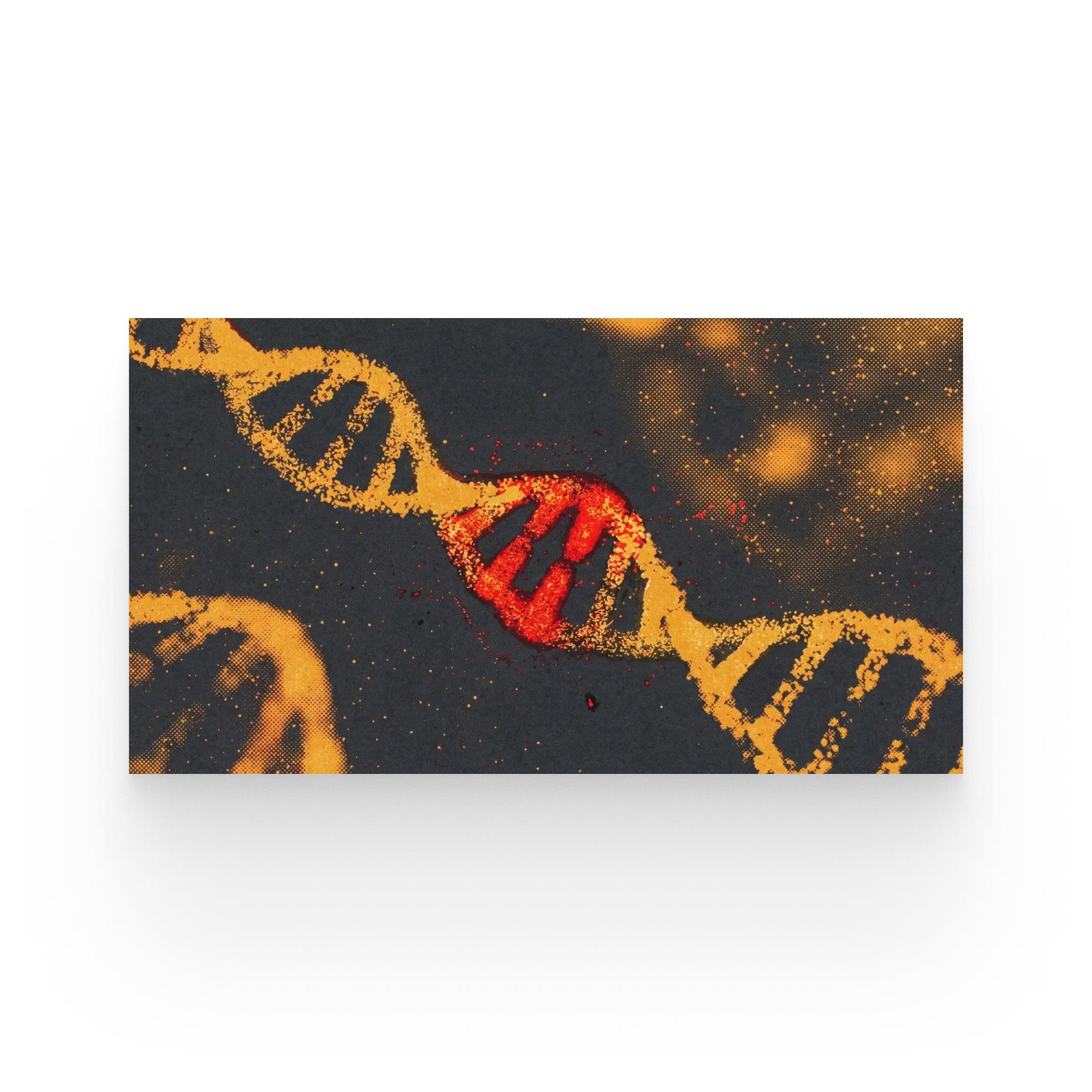

Predicting disease-causing genetic variants
In partnership with Mayo Clinic, our approach to interpreting a genomics foundation model achieves state-of-the-art performance, genome-wide coverage, and interpretable-by-design predictions for all 4.2 million variants in ClinVar.
State-of-the-art pathogenicity prediction across 839k ClinVar variants
Genome-wide coverage spanning coding and non-coding regions
Open source database of interpretable predictions for all 4.2M ClinVar variants

Discovering a novel class of biomarkers for Alzheimer's from a model's internals
An AI model was trained to detect Alzheimer's from blood samples. We opened it up to understand how—and found that DNA fragment length patterns dominate its decision-making. We distilled this insight into a human-interpretable classifier that generalizes to an independent cohort. This was the first major finding in the natural sciences obtained from reverse-engineering a foundation model.
Interpretability surfaced fragment length as the dominant predictive signal
Distilled model behavior into a simple, human-readable classifier
Validated on an independent cohort, outperforming prior biomarker classes


Seeing inside a frontier genomics model
We decomposed Arc Institute's Evo 2, a frontier genomics model, into interpretable features, revealing how it represents DNA across domains of life and where its predictions reflect real biology versus artifacts. Published in Nature.
Decomposed Evo 2's internal representations into interpretable features
Features span sequence, structure, and function
Found the tree of life represented as a manifold in the model's internal structures

Request Access
Training or fine-tuning an AI model? We partner with companies training foundation models across architectures and modalities to interpret their models. Contact us to learn more.